I was a fourth grader with a scrawny physique, an academic perfectionist streak, and an abiding interest in extraterrestrial life when my family moved from the suburbs of Houston to the suburbs of Charleston. Separated by 1,000 miles from my two best friends who accepted me for who I was, I walked into a classroom full of strangers and wondered if I would have to reinvent myself to make new friends.
My anxiety faded when I met Zack Simpson, a kindred spirit in my class with a sense of humor that an older version of me would describe as surreal. His family welcomed me into their home, and one morning after a sleepover, he said something that cemented our friendship for life:
“Have you ever heard of Weird Al?”
I hadn’t. My main exposure to music at the time was through contemporary Christian radio and my dad’s old Harry Chapin records, so I didn’t even know the songs that Weird Al Yankovic was famous for parodying. Zack put on Yankovic’s newest tape at the time, 1999’s Running with Scissors, and I laughed, transfixed.
The cultural references were entirely lost on me, but it didn’t matter. “The Weird Al Show Theme” was a classically unhinged Yankovic yarn, and I knew just enough Yiddish phrases to enjoy the premise of “Pretty Fly for a Rabbi.” When we arrived at “Polka Power,” one of Al’s signature mash-ups of the era’s big radio hits, I honestly thought he was just coming up with silly lyrics to sing over an accordion. Years later, revisiting the Puff Daddy spoof “It’s All About the Pentiums,” I would fall out of a chair laughing as I finally grasped the line, “You’re just about as useless as JPEGs to Helen Keller.”
Will there be another Weird Al movie? Don’t miss Paul’s interview with Weird Al ahead of his Charleston show.
Perhaps most importantly, Zack’s decision to play Weird Al for me sent the same message that is always communicated when a friend tries to turn you on to something: “You seem like the kind of person who’d like this.” And the kind of person I was, at this point in my life, was a sensitive boy who cried more than any of his classmates and would rather read through his mom’s collection of novels from the Christian bookstore than watch the new Godzilla movie. In this context, as Zack’s mother helped make me a copy of the tape to take home (Sorry, Al, I swear I bought the CD later), I received this message loud and clear: “You’re a weird kid, and that’s OK.”
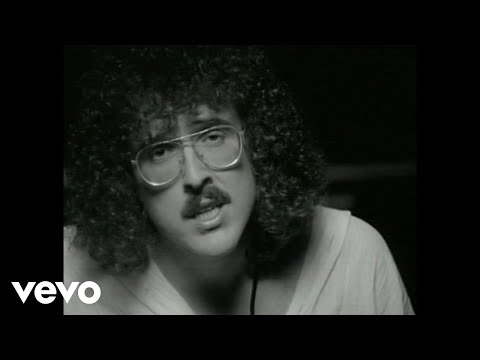
During my awkward middle school years, I listened to Weird Al’s back catalogue so many times that the songs ceased to be funny and actually became cathartic in some cases. I can still remember, in my most self-pitying moments of teenage heartbreak, finding both emotional release and ironic detachment in the lyrics of “You Don’t Love Me Anymore”:
“You know, I even think it’s kinda cute the way / You poison my coffee just a little each day / I still remember the way that you laughed / When you pushed me down the elevator shaft.”
I feel the same way about Yankovic’s 1992 comeback album Off the Deep End, which contained “You Don’t Love Me Anymore” and the seminal Nirvana parody “Smells Like Nirvana,” as a lot of jazz aficionados feel about A Love Supreme, as Midwestern basketball fans feel about the 1996 Chicago Bulls, or as Republicans feel about the Reagan Revolution. It is a nearly perfect album. I still believe that.
I came to learn that plenty of casual Yankovic fans had heard the hit singles, including “Fat” (a parody of Michael Jackson’s “Bad”) and, later, the Chamillionaire spoof “White & Nerdy.” But like any good hipster, I came to love the deep cuts and the “older stuff” even more. Yeah, of course you’ve heard “Like a Surgeon,” but are you familiar with “Generic Blues,” off the soundtrack to Al’s 1989 cult-classic film UHF? It showcased, once again, how Yankovic’s backing band was capable of pulling off literally every genre in modern popular music, and its closing lines would make Albert Camus smile a thin existentialist smile:

“I got the blues so bad / Kinda wish I was dead / Maybe I’ll blow my brains out, mama / Or maybe I’ll go bowling / Or I just might go bowling / Maybe I’ll just rent some shoes and go bowling / Maybe I’ll join a league, enter a tournament, put on a stupid looking shirt, and go bowling / Instead.”
I was hardly what you’d call a rebellious teen, but I did sense that there was some transgressive material hidden in my treasured collection of Weird Al CDs. The chorus of the They Might Be Giants style homage “Everything You Know Is Wrong” (Bad Hair Day, 1996), divorced from its verses about time travel, prosthetic lips, and the floating disembodied head of Colonel Sanders, could just as easily have been the chorus of a punk anthem: “Everything you know is wrong / Black is white, up is down, and short is long / And everything you thought was just so important doesn’t matter.”
Of course, I did eventually discover actual punk rock, and I later embraced the strain of screamy, emo-laced metalcore that took hold at my high school in the mid-2000s. But my fascination with Weird Al never really went away.
One summer when I was in middle school, I set myself the task of memorizing “Albuquerque,” the 11-minute, free-verse, spoken-word epic at the end of Running With Scissors. The lyrics were too long to fit in the CD liner notes, so I set myself up in my room with a Walkman and a notepad and wrote the words out by hand, start to finish, and studied their nuances.
It was a stupid way to spend my summer vacation, but “Albuquerque” ended up working as a tidy little creative writing lesson. I learned about the technique of anticlimax and the inherent humor of certain words and phrases, like “You’ve got weasels on your face” and “Hey, mom, what’s up with all the sauerkraut?”
I successfully memorized the whole thing, and I didn’t hesitate to break it out at parties, in the school cafeteria, or on trips to the bowling alley in Ladson, where I regaled my peers with the whole absurd thing, start to finish, only pausing to take a breath before the choruses. In retrospect, “Albuquerque” probably staved off the drama and heartache of dating for several years of my young life by repelling most of the girls in my class. The girl who would become my wife has endured hearing it more times than I care to admit — she must really love me.
Weird Al followed me to college. While copy editing for the student newspaper late one night, I had a flash of inspiration and volunteered to write the horoscopes in the style of “Your Horoscope,” Yankovic’s original ska tune that featured ludicrously specific and misanthropic predictions (“Aquarius: There’s travel in your future when your tongue freezes to the back of a speeding bus / Fill that void in your pathetic life by playing Whac-A-Mole 17 hours a day”). And so it came to be that I looked up at the stars and prophesied nonsense every weekday for an entire semester.

Over the years, my devotion to Weird Al would wax and wane, but then a new album would come out — 2003’s Poodle Hat, followed by 2006’s Straight Outta Lynwood — and I’d fall in love all over again, particularly when he delved into hip-hop (“Couch Potato,” a spoof of Eminem’s “Lose Yourself”) and R&B (“Trapped in the Drive-Thru,” after R. Kelly’s “Trapped in the Closet”). Somehow, as he entered his 50s, he remained relevant, surprising, even edgy.
He lost me for a few years with Alpocalypse (2011), which had a lot of duds in my opinion, but then he came roaring back with Mandatory Fun (2014), which became his first No. 1 record on the Billboard charts, buoyed by some killer music videos. I particularly appreciated the album closer “Jackson Park Express,” which I classify as dark-side Weird Al gold in the same upper echelon as “Happy Birthday” (“Weird Al” Yankovic, 1983) and “Nature Trail to Hell” (In 3-D, 1984).
I now find myself at a point in life where I’m equally excited at the prospects of Sufjan Stevens and Weird Al Yankovic coming to my town. I’m not sure what the Venn diagram of those two fanbases looks like, but there I stand. I’ll definitely be attending both concerts, and I’m definitely going to cry during both of them.
Shortly after the Performing Arts Center announced in January that the Weird One would grace us with his presence, Justin Osborne, frontman of the alternative folk band SUSTO, contacted our music editor Kelly Rae Smith asking if he could interview Yankovic as part of the City Paper‘s Unlikely Encounters series (see this week’s conversation between Brave Baby’s Keon Masters and Counting Crows’ Adam Duritz), which presents conversations between Charleston-based musicians and national touring acts. Kelly Rae correctly informed Osborne that he’d have to challenge me to a knife fight if he wanted that interview.
I felt some remorse for depriving Osborne of the opportunity, so I called him up to ask about his love for Weird Al. Talking from the road as his band toured with Iron & Wine and Ben Bridwell of Band of Horses, he gushed with sincerity. “It’s the only show besides SUSTO shows that I have marked on my calendar,” he said.
Growing up in the insular Clarendon County community of Puddin’ Swamp, Osborne didn’t have an entry point to understand Coolio’s “Gangsta’s Paradise,” but he could certainly appreciate Yankovic’s parody, “Amish Paradise.”
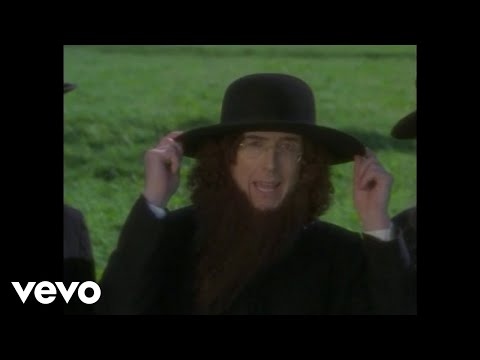
“Those were songs that my brothers and I loved. When we listened to Bad Hair Day, there was a point where I could probably sing the lyrics to every song, frontwards and backwards. We would sing them all the time,” Osborne says. “I don’t know if the comedy always hit home with us because we were young, but it was just a fun parody of songs that we couldn’t get into otherwise.”
Today, Osborne says, he admires Yankovic as an artist for having blazed his own path and built a musical career that no one else on earth has been able to emulate. “We were just talking in the van before you called about how — does he have competition?” he says. “He created that genre; he created the whole concept of it. He’s just a wacky, fun, and positive guy, and that goes a long way.”
Now, Yankovic didn’t quite invent his genre; he’s always been careful to tip his hat to Dr. Demento for laying the groundwork. But no one before or since has done it like him.
Who else could have devised and layered those gorgeous, Beach Boys-worthy vocal harmonies on the aggressively educational track “Pancreas” and kept a straight face? Who else could have convinced Frank Zappa’s son Dweezil to rip a guitar solo on the Zappa tribute “Genius in France” or charmed Kurt Cobain with a song about the incomprehensibility of Nirvana lyrics? Who else could command a worldwide nerd fiefdom with naught but an accordion, a killer backing band, and an extensive wardrobe of Hawaiian shirts?
Nobody, that’s who. And no one else could have spoken such weird words of comfort to the gawky, emotional, self-critical 13-year-old version of me as the ones that end “Albuquerque,” which I still know by heart:
“If one day you happen to wake up and find yourself in an existential quandary / Full of loathing and self-doubt and wracked with the pain and isolation of your pitiful, meaningless existence / At least you can take a small bit of comfort in knowing that somewhere out there in this crazy old mixed-up universe of ours / There’s still a little place / Called Albuquerque.”
Ask me about it at a party sometime. I’ll sing it for you.

Help keep the City Paper free.
No paywalls.
No subscription cost.
Free delivery at 800 locations.
Help support independent journalism by donating today.