- BIG STORY: S.C. lawmakers push requiring local cooperation with ICE
- MORE NEWS: S.C. Senate amends House tax cut, more than doubling cost
- ISSUE TRACKER: S.C. House wants schools to post Ten Commandments
- LOWCOUNTRY, Ariail: Works for Trump
- BRACK: McMaster should veto bill keeping college payments secret
- MYSTERY PHOTO: Nice horsey
- FEEDBACK: Send us a letter
S.C. lawmakers advance bill requiring local cooperation with ICE
By Jack O’Toole, Statehouse bureau | As the Trump administration continues to ramp up its controversial mass deportation program, South Carolina lawmakers took the first major step to advance legislation that would require local law enforcement agencies across the state to assist in federal immigration enforcement efforts.

Under the bill (H. 4764), which currently has 50 Republican co-sponsors including powerful House Speaker Murrell Smith of Sumter, any S.C. law enforcement agency that operates a jail must enter into what’s called a 287(g) agreement with U.S. Immigration and Customs Enforcement (ICE).
The agreements can range from detaining suspected illegal immigrants in local jails to street-level enforcement actions, such as accompanying federal officers on immigration raids and what critics call “show me your papers” traffic stops.
S.C. Rep. Travis Moore, R-Spartanburg, is the bill’s chief sponsor and chairman of the House subcommittee that approved it in a 3-1 vote.
“If we have people here illegally who are violating our laws, victimizing our fellow citizens, I do not believe it’s an unreasonable step to ask our local law enforcement agencies to coordinate with the federal government,” he told committee members.
But Orangeburg Democratic Rep. Jerry Govan pushed back, questioning the need for a mandate when local officials are already free to enter into 287 (g) agreements when they believe the benefits outweigh the costs in their communities.
“We need to be cautious in terms of making it harder for the folks who are enforcing our laws to do their jobs,” Govan said.
What’s more, he took issue with the suggestion by some that supporting the bill was synonymous with supporting public safety.
“Let me make this clear: there’s not anyone I’ve met in this General Assembly or the people who’ve testified who are against making the citizens of our state safer,” Govan said. “It concerns me as a lifelong South Carolinian and as an American that we’ve reached a point in this country where it’s us against them.”
A national report with local implications
The South Carolina action came on the same day a new national report from the American Civil Liberties Union alleged systematic problems with the 287(g) program, including racial profiling, civil rights violations and fear in targeted communities.
According to the report, participation in the program has grown dramatically since President Donald Trump took office in January 2025, exploding from 133 participating agencies to more than 1,000 today. In S.C., the ACLU reports, the number has grown from 3 to 37, from large counties like Charleston and Greenville to small towns such as Elloree and Pelion.
“ICE is enlisting thousands of state and local police to assist in operations that endanger citizens and noncitizens alike, draining local police resources and driving public fear that any interaction with local law enforcement could lead to violence and abuse,” the author’s report said in a release.
She added, “It has never been more dangerous to join ICE’s 287(g) program, both for the communities that fall into ICE’s grip by taking part, and the local law enforcement agencies that risk lawsuits and an enormous loss of public trust.”
While the Trump administration hasn’t responded directly to the report, Trump dismissed criticism of his deportation program in this week’s State of the Union address, saying that “the only thing standing between Americans and a wide-open border right now is President Donald J. Trump and our great Republican patriots in Congress.”
South Carolina community and religious leaders echoed the report’s concerns at a Thursday press conference sponsored by the ACLU of S.C.
“We have seen with our own eyes throughout the country that ICE has flagrant disregard for the law and complete disrespect for order,” said the Rev. Jenny McDevitt, pastor of Columbia’s Shandon Presbyterian Church. “Putting our state law enforcement in the position of collaboration and cooperation with ICE is naive and dangerous.”
Speaking for the ACLU of S.C., advocacy director Courtney Thomas referred to several recent high-profile incidents involving ICE officers around the country, including the shooting deaths of two Minnesota citizens.
Incidents like those, as well as large-scale immigration raids and “dragnets,” damage the trust and effectiveness of local law enforcement agencies that partner with ICE, she argued.
“All of this diverts resources away from solving actual crime,” she said in calling for state lawmakers to reject the bill.
The legislation now moves to the full S.C. House Judiciary Committee, where Chairman Weston Newton, R-Beaufort, is also a sponsor.
- Have a comment? Send to: feedback@statehousereport.com
S.C. Senate amends House tax cut, more than doubling cost
By Jack O’Toole, Statehouse bureau | The S.C. Senate this week amended and approved an income tax cut that the S.C. House approved last year. But senators’ version, more than doubled the cost of revenue the state would lose to $309 million thanks to a proposed steeper cut to the top rate.

Under the Senate’s Tuesday version, which reduces the top rate from 6% to 5.21%, some 43% of S.C. filers would see lower income tax bills next year, while 57% would see no change or a small tax increase due to technical changes in the way income is calculated.
GOP leaders in the S.C. House and Senate say cuts to the top rate are necessary despite the state’s low average income tax rate of 2.9%. Why? They say they need to be more competitive with states like Georgia and North Carolina, where the average rate is actually higher but the nominal rate looks lower on paper.
The bill now heads back to the House, where members will have to decide whether to accept the Senate’s changes or schedule a conference committee between the two chambers to work out their differences.
In other recent news
Plans being finalized for Jackson’s Monday remembrance. Plans are still being finalized, but a public service is likely to happen at the state Capitol around 11 a.m. where he will be in repose in the rotunda. In late afternoon, another service is expected at Brookland Baptist Church in West Columbia.
2026: S.C. attorney general hopefuls react to stand-your-ground ruling. Some reactions after a circuit court ruling that a man is not immune to consequences for his role in a 2023 road rage shooting in Horry County.
- Wilson calls for less hostility in governor’s race
- S.C. GOP adjusts debate schedule for gubernatorial candidates
S.C. House advances bill requiring Ten Commandments in classrooms. A bill that would require the Ten Commandments to be displayed in every public school and university classroom in South Carolina passed on second reading in the State House on Wednesday after hours of heated debate that largely fell along party lines.
- State university payments to college athletes can remain secret under bill headed to McMaster’s desk
- S.C. lawmakers push alcohol server training extension
- S.C. Senate seeks to switch up gubernatorial appointments amid mass vacancies, lingering interims
- House resolution to bring awareness to missing Native American women
- S.C. lawmakers consider ‘buffer law’ to protect first responders
- S.C. lawmakers considering mandatory labeling a shrimp catch’s country of origin
- S.C. senators approve new minimum penalties for child sex abuse crimes
- S.C. bill would replace high school league with new state-controlled association
Nearly 12,000 warnings issued under state’s hands-free law. State law enforcement authorities have issued nearly 12,000 warnings under South Carolina’s new hands-free driving law. The tickets will have teeth starting Feb. 28.
S.C. Forum seeks consensus-driven solutions. The new initiative launched Wednesday with legislators of both parties who committed to potentially sponsor ideas from what people say they really want.
21 more hospitalized in Upstate measles outbreak. The South Carolina Department of Public Health is reporting six new measles cases in the state since last Tuesday. The total number of measles cases in the state has risen to 979.
Biden to be honored at South Carolina reception. Former President Joe Biden will return to South Carolina for the first time since leaving office, attending a special reception hosted by the South Carolina Democratic Party.
S.C. House wants schools to post Ten Commandments
By Jack O’Toole, Statehouse bureau | The S.C. House on Wednesday passed a bill requiring state public schools, including colleges, to post the Ten Commandments of the Judeo-Christin tradition in all Palmetto State classrooms.

The 84-31 vote came less than a week after a federal appeals court allowed a similar Louisiana law to be enforced while the constitutionality of the statute is litigated.
Bills that are on the move
Tax cuts: The S.C. Senate on Feb. 24 amended and passed an S.C. House bill that would cut the state’s top income tax rate while raising taxes on lower-income taxpayers. The amended Senate version would more than double the cost of the proposed tax cut to $308 million by pushing the top rate down from 6% to 5.21% rather than the House-approved 5.39%.
Immigration: Currently in the House Judiciary Committee, H. 4764 would require all S.C. sheriffs to partner with the federal government to enforce national immigration laws. LATEST: A House subcommittee approved the measure on Feb. 26, sending it on to the full Judiciary Committee for further action.
Judicial selection: A bill with the support of leaders in both chambers would give the governor more power in selecting state judges. LATEST: S.C. House members passed the bill 86-25 on Feb. 11, sending it to the Senate for further consideration.
Juvenile justice: A special committee created by House Speaker Murrell Smith, R-Sumter, is meeting throughout the session to advance reforms to the state’s juvenile justice system. LATEST: The committee’s first bipartisan bill, H. 5117, is pending before the House Judiciary Committee.
Bills in less of a hurry
Concurrency: A bill by Beaufort Republican Sen. Tom Davis that would allow local governments to limit development in areas with insufficient infrastructure received its first subcommittee hearing on Feb. 11.
Highway reform: Members of the House Ad Hoc SCDOT Modernization Committee introduced sweeping legislation on Jan. 29 aimed at shaking up the state’s transportation system, including stronger SCDOT executive oversight, increased county responsibility for some state roads and higher taxes on electric vehicles. A bill with similar goals has also been introduced in the S.C. Senate.
DOGE SC: Multiple bills promising to cut the state workforce and the regulations they enforce have been introduced for consideration in 2026. In particular, House GOP leaders have pledged to get their “Small Business Regulatory Freedom Act” passed through the S.C. Senate this session. LATEST: Senate leaders say the bill could come up for consideration in late February or March.
Rolling back affirmative action and DEI: Several bills are still currently awaiting consideration, including one to codify Gov. Henry McMaster’s executive order ending affirmative action in state contracting.
Abortion: A House Judiciary subcommittee on Jan. 14 killed one bill to treat abortion as homicide and advanced another to reclassify abortion pills as Schedule IV drugs. LATEST: The S.C. House on Feb. 4 voted 81-31 to advance the abortion pill rescheduling bill to the S.C. Senate.
- Last updated: 9 a.m., Feb. 27, 2026. You can find the latest update every Friday at charlestoncitypaper.com/statehouse.
Works for Trump

Award-winning cartoonist Robert Ariail has a special knack for poking a little fun in just the right way. This week, Ariail has a cartoon comment on the art of deflection by President Donald Trump.
- Love this week’s cartoon or hate it? Did he go too far, or not far enough? Send your thoughts to feedback@statehousereport.com.
McMaster should veto bill keeping college payments secret
Commentary by Andy Brack | Gov. Henry McMaster needs to veto rushed legislation that seeks to keep public payments to college athletes secret.
To do otherwise would tarnish his career of supporting transparency as embodied in the state’s Freedom of Information Act.

If you haven’t been paying attention to this month’s controversy, you probably know college athletes now are able to get paid big money while they’re still in college. It makes a lot of sense because it allows them to receive something for putting their bodies through all sorts of strain and pain. In the event they have a terrible injury and can’t later turn pro, at least they’ve earned something. For colleges, it’s a good deal because it allows them to keep athletes in colleges to play, instead of leaving quickly for the bucks. So it is good for colleges and it’s good for athletes.
But at issue is whether public universities like Clemson and the University of South Carolina should be able to shield public payments to key players from disclosure as required by the state’s Freedom of Information Act.

The key phrase here is “public dollars.” Because once a college absorbs a gift or fee from an outside source and puts it in a foundation or in its general fund, that money is public, not private. And state law currently requires its disclosure.
But colleges want to keep these payments quiet. Which is why the state House rushed a measure to keep the money private by a 111-2 floor vote outside of the normal deliberative process. The bill didn’t even get a committee or subcommittee vote before it hit the floor, thus chilling debate and showing all of the symptoms of a runaway legislative train.
The bill then went to the Senate, where it zoomed along without a subcommittee hearing. It left the Senate Education Committee on Feb. 11 and passed 30-13 on the second of three readings in the Senate. The third reading generally is pro forma. But some good reporting by The Post and Courier gave lawmakers pause with questions about how some of the millions of dollars of private payments that went to Clemson University that became public money was remarkably similar to state tax money that was appropriated to Clemson.
So the Senate hauled in athletic officials for another hearing to wipe some of the egg off of their faces and to be assured that appropriated tax money wasn’t being used to pay college athletes.
You can probably read the writing on the wall, right? Of course, college officials said appropriated money wasn’t being used. But senators didn’t ask whether “public money” was being used, according to one attorney. And that’s the key question, because millions from TV rights, ticket sales and donations become public money once accepted by the university. Besides, as the Post and Courier reported, appropriated money that is roughly equal to the amount being paid to student athletes ended up in the same athletic department accounts that were paying the students, making it impossible to tell which dollars were paying for what.
So despite this shell game and after the Senate’s political theater, senators said OK to the bill and merrily sent it along on Feb. 26 to the governor.
Now McMaster has three choices – sign it, veto it or let it become law without his signature. We urge him to veto the legislation to protect his long record of standing up for government transparency.
In 2017 when he signed a law to strengthen the FOIA, McMaster said “Government has to be accountable to the people it serves, and its citizens should have unimpeded access to public information that speaks to whether or not their best interests are being served.”
He also has long shared a four-word mantra to keep the public’s trust in government and about its right to know: “When in doubt – disclose.”
Not only should the governor use this to veto this bad legislation. But members of the General Assembly should use it to sustain his veto.
Whenever colleges are paying millions to have star athletes on their rosters using public money, the amount being paid needs to see the light of day, not be stashed in dark corners under sweaty lockers.
Andy Brack is editor and publisher of the Charleston City Paper and Statehouse Report. Have a comment? Send to: feedback@statehousereport.com
Nice horsey

Here’s a picture of a horse at night somewhere in South Carolina. Where? Bonus points if you can guess the street correctly. Send your best guess – plus hometown and name – to: feedback@statehousereport.com.
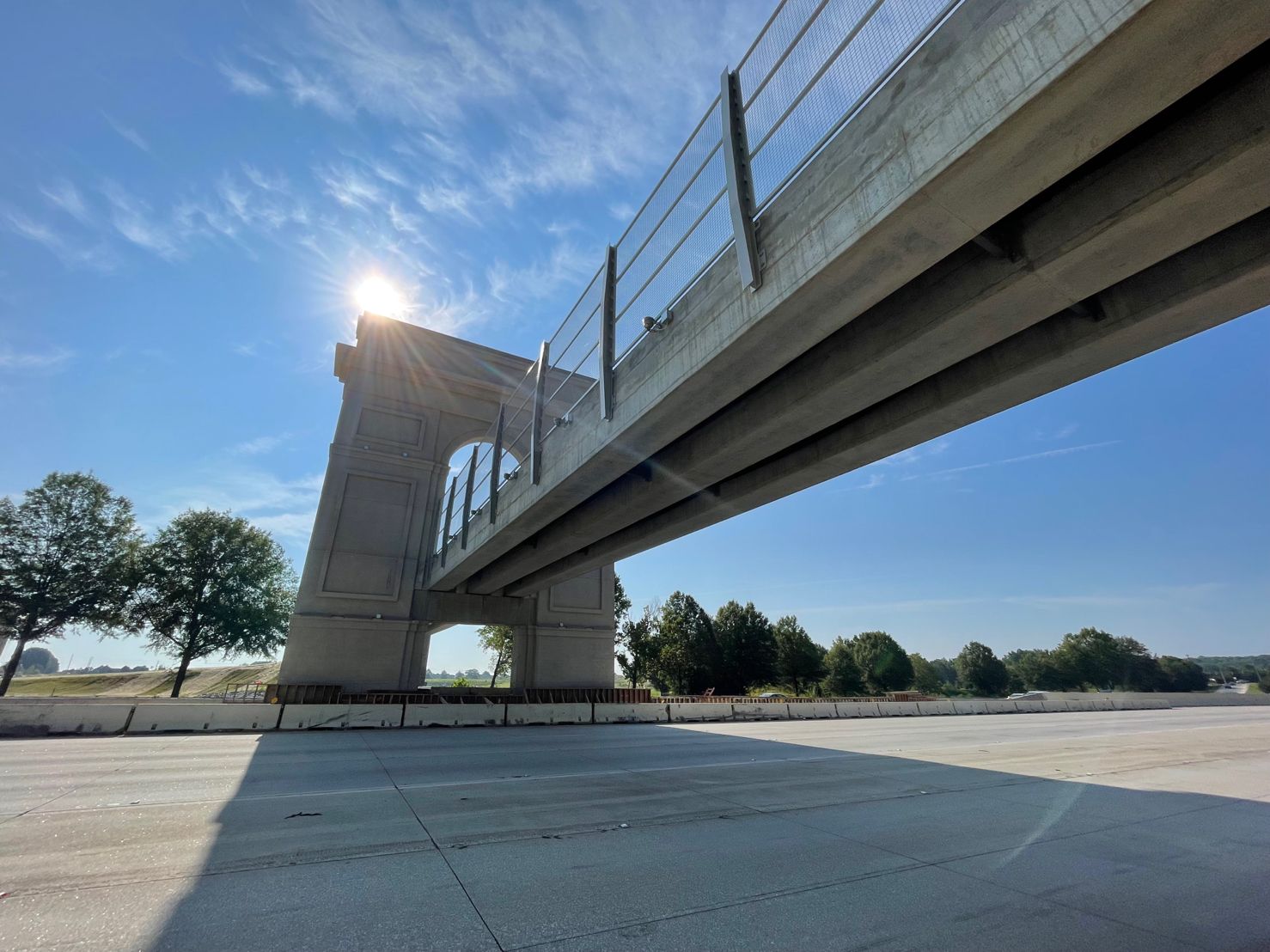
Meanwhile, last week’s mystery – “Pretty bridge” – shows the really neat Mauldin Gateway Bridge over six lanes of Interstate 385.

Hats off to the several veteran sleuths who got the correct answer: Jay Altman of Columbia; Allan Peel of San Antonio, Texas; George Graf of Palmyra, Va.; Frank Bouknight of Summerville; and Don Clark of Hartsville.
- SHARE: If you have a Mystery Photo to share, please send it to us – and make sure you tell us what it is!
Send us your thoughts
Please send us your thoughts about politics and policy in South Carolina, but make sure to leave phone numbers and hometowns to help us verify them for publication. We publish non-defamatory comments, but unless you provide your contact information – name and hometown, plus a phone number used only by us for verification – we can’t publish your views.
- Have a comment? Send your letters or comments to: feedback@statehousereport.com. Make sure to provide your contact details (name, hometown and phone number for verification. Letters are limited to 150 words.
Statehouse Report, founded in 2001 as a weekly legislative forecast that informs readers about what is going to happen in South Carolina politics and policy, is provided by email to you at no charge every Friday.
- Editor and publisher: Andy Brack, 843.670.3996
- Statehouse bureau chief: Jack O’Toole
We can use your help
We’re proud to offer Statehouse Report for free. For more than a dozen years, we’ve been the go-to place for insightful independent policy and political news and views in the Palmetto State. And we love it as much as you do.
But now, we can use your help. If you’ve been thinking of contributing to Statehouse Report over the years, now would be a great time to contribute as we deal with the crisis. In advance, thank you.
More
- Mailing address: Send inquiries by mail to: P.O. Box 21942, Charleston, SC 29413
- Subscriptions are free. If you want to subscribe, send us an email: feedback@statehousereport.com with the word “subscribe” in the subject. We hope you’ll keep receiving the great news and information from Statehouse Report, but if you need to unsubscribe, go to the bottom of the weekly email issue and follow the instructions.
- Read our sister publication: Charleston City Paper (every Friday in print; Every day online)
- © 2026, Statehouse Report, a publication of City Paper Publishing, LLC. All rights reserved.

Help keep the City Paper free.
No paywalls.
No subscription cost.
Free delivery at 800 locations.
Help support independent journalism by donating today.