

State senators in North Charleston Tuesday night heard from voters about split precincts, preserving geographic and cultural communities and above all else, ending political gerrymandering.
About 100 people gathered at Trident Tech in North Charleston, as state lawmakers gear up to redraw their own district lines with new census data expected in the coming days. Charleston’s existing districts — lamented Tuesday for irregular shapes and illogical boundaries — are expected to change some with added growth. But the 10-year redistricting process rarely changes much, and when it does, it often favors the majority party, a process known as gerrymandering.
“Are we just here to look good?” asked George Tempel, former chair of Charleston County Democratic Party, echoing sentiments of more than two dozen speakers before him. Others ruminated on competitive elections and advocated for local neighborhoods and communities.
State Sen. Luke Rankin, R-Conway, framed the 6:30 p.m. meeting as a chance for residents to make comments for the public record about how their communities could be affected by redistricting. Members of the Senate Redistricting Subcommittee, which Rankin chairs, are hosting similar meetings across the state. Video footage of the hearing is available online.
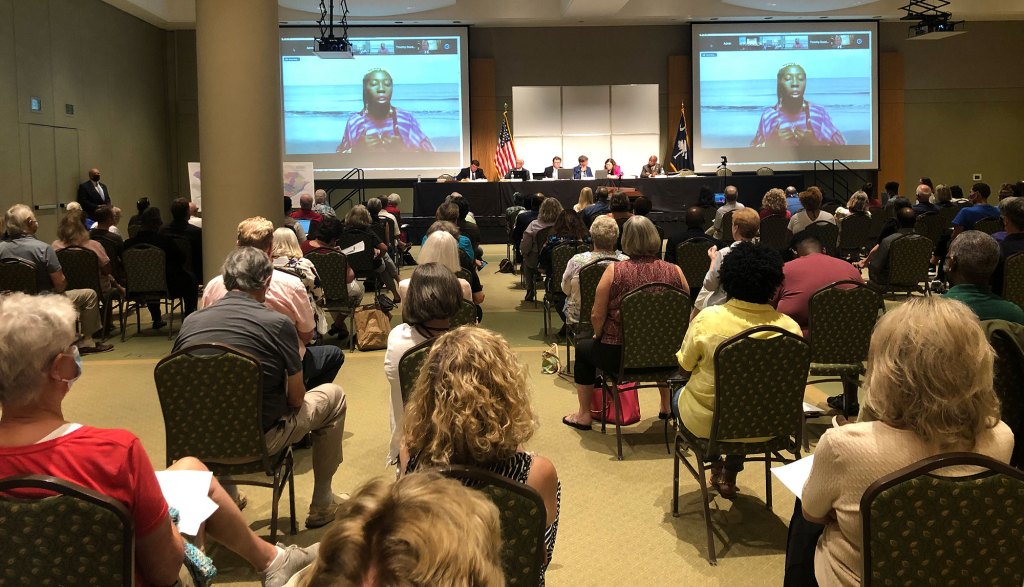
The 41 Lowcountry residents who spoke ranged from engaged citizens to political officials, like Folly Beach Mayor Tim Goodwin, to cultural leaders, like Queen Quet of the Gullah/Geechee Nation. Some made the case for political boundaries that respect distinct cultural and socioeconomic enclaves within the state, described as “communities of interest” under federal law.
“Not only is it that our language is unique, which brings millions of tourists to this area every year, but also our cultural communities from our praise houses to the fact that we still bury along the Intracoastal Waterway and along those marsh-ways,” Queen Quet said, mentioning St. Helena Island specifically. “We have a culture in common here that we want to make sure is sustained.”
Other residents spent their five-minute allotment to describe how grouping disparate neighboring communities into the same districts can diminish their electoral impacts.
“Because of this thing called gerrymandering, the system allows the representative to pick their voters instead of the voters picking their representatives,” said Tim Lewis, chair of the Dorchester County Democratic Party.
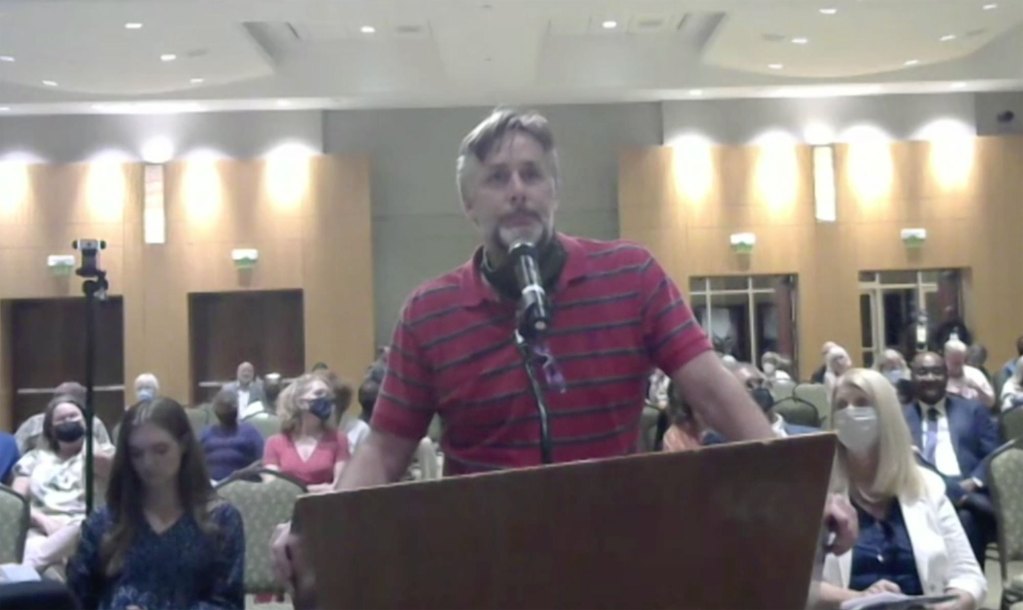
Francis Marion Beylotte, a West Ashley resident who ran for school board in 2020, was skeptical any of the speeches and grandstanding would have any impact when lawmakers started making maps, calling the proceedings a “dog and pony show.”
“When I look at this map … it makes no sense whatsoever. And the thing is, I know that you know that,” he told the senators on the dais. “But I think, at the end of the day, nothing is going to change.”
Members of the House and Senate are expected to start drafting district lines once updated census data is released to states this week.
The Senate will hold its final meetings tonight in Conway and Thursday in Aiken. Members of the House Redistricting Subcommittee will be at North Charleston City Hall Sept. 14.

Help keep the City Paper free.
No paywalls.
No subscription cost.
Free delivery at 800 locations.
Help support independent journalism by donating today.